12 AI Skills to Master in 2025 for Supply Chain Excellence
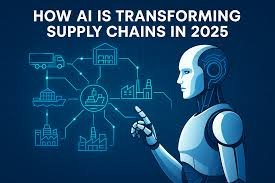
Artificial Intelligence (AI) is no longer a “nice to have” — it’s becoming the backbone of modern supply chain and logistics operations. From predictive analytics to automation and real-time decision-making, mastering AI is what separates resilient supply chains from fragile ones.
Here are the 12 AI skills supply chain professionals must focus on in 2025 to stay competitive:
1. Prompt Engineering
Supply chain teams will rely heavily on LLMs like ChatGPT or Gemini for planning, documentation, and reporting. Knowing how to craft precise prompts helps managers generate accurate forecasts, supplier reports, and SOPs faster.


2. AI Workflow Automation
Imagine automating repetitive tasks such as PO approvals, invoice processing, or shipment notifications. Tools like Zapier or Make integrated with ERP/SCM systems reduce manual errors and save hours.
3. AI Agents
AI-powered agents (like LangGraph or CrewAI) can manage end-to-end tasks: tracking shipments, coordinating warehouses, or even negotiating with suppliers. Supply chain leaders must learn how to deploy and oversee them.
4. Retrieval-Augmented Generation (RAG)
Supply chains depend on historical data — invoices, customs records, contracts. RAG connects AI to private data sources, allowing teams to query massive datasets quickly and extract actionable insights.
5. Multimodal AI
Future supply chain visibility will be multimodal: AI models will process text (orders), images (warehouse scans), and video (inspection feeds) simultaneously to provide a single, unified view of operations.
6. Fine-Tuning and AI Assistants
Companies will increasingly fine-tune AI on proprietary data (supplier terms, SKU catalogs). This creates domain-specific assistants that help procurement, logistics, and planning teams.
7. Voice AI and Avatars
Imagine virtual assistants in warehouses guiding workers via voice or AR glasses. Tools like ElevenLabs and VAPI are transforming training, safety checks, and even customer service.
8. AI Tool Stacking
Supply chain teams often juggle ERPs, WMS, TMS, and spreadsheets. Combining AI tools with platforms like ClickUp or Notion creates a central digital workspace, improving collaboration.
9. AI Video Content Generation
For training warehouse staff or onboarding drivers, AI video tools like Runway or Veed can generate realistic explainer videos at scale, cutting costs for L&D teams.
10. SaaS Development (AI + Supply Chain)
Supply chain managers should understand how AI-powered SaaS platforms are built. Knowing basics of APIs and no-code builders allows teams to test tools faster, from route optimization apps to demand forecasting models.
11. LLM Management
Managing enterprise-level AI models (like controlling access, tracking usage, and ensuring compliance) will be critical. Supply chain leaders need to work with IT on governance.
12. Staying Updated
AI evolves daily. Leaders must follow updates, read research papers, and test new tools. Early adoption provides a competitive advantage in forecasting, warehouse efficiency, and customer satisfaction.
Why This Matters for Supply Chains in 2025
By mastering these 12 skills, supply chain professionals can:
- Cut costs through automation ⚡
- Improve agility with real-time insights 📊
- Enhance supplier/customer collaboration 🤝
- Build future-proof, AI-enabled supply chains 🚀
🔹 BY ENG JAMAL AHMED
🌐 www.supplychainabc.com
#SupplyChain #Logistics #ArtificialIntelligence #AI #FutureOfWork #DigitalTransformation